

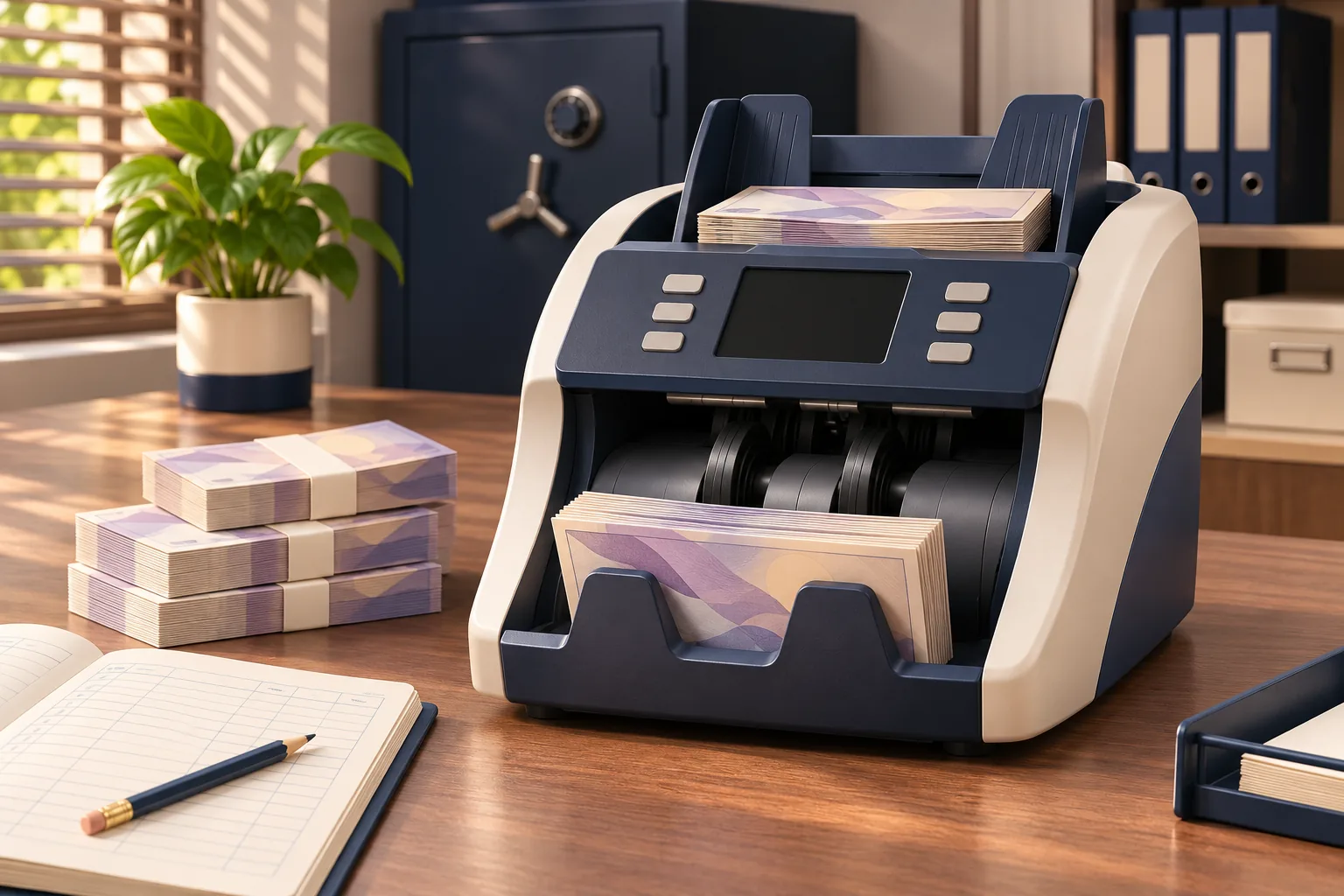
Two tills close at the same time. A third employee arrives with a departmental cash batch. All three need the same counting machine. Without a clear receiving and handover routine, a fast machine can sit in the middle of a confusing desk.
A shared counting station works when everyone can identify the cash being processed, the person responsible and the next step. Equipment capacity matters, but the surrounding arrangement deserves equal attention.
Design the desk around one active batch
Mark separate positions for incoming work, the batch currently being counted and completed work. Keep exceptions with the active batch in a distinct place. Labels or trays can help, provided they follow the organisation’s cash-handling procedures and do not expose sensitive information.
The operator should be able to load notes, read the display and collect output without reaching over someone else’s cash. Check the machine’s dimensions and required clearance before deciding that an existing desk is large enough.
Make every handover answer four questions
- Which till, department or shift supplied this batch?
- Who received it and who is authorised to count it?
- Is the batch waiting, in progress or complete?
- Are any exceptions or discrepancies still unresolved?
A displayed total is useful only when it can be connected to the correct source. Giving a batch a reference at the beginning is easier than trying to reconstruct its identity after several piles have been moved.
Measure the queue at the busiest time
Observe the period when work actually overlaps. Include preparation, loading, recounts, recording and collection in the time assessment. Average daily note volume can conceal a short, intense closing-time queue.
When assessing a currency counting machine in Sri Lanka, describe that peak period and the expected functions. Ask whether the proposed configuration performs the required count or value task. Speed alone will not resolve a queue caused by unclear receiving responsibilities.
If sharing creates repeated delays, review the schedule or allocation of equipment. Waiting cash should remain within an approved, supervised process. Staff should not invent informal storage arrangements because the operator is busy.
Reset the working routine between users
Each operator should check the selected mode before starting. The previous user’s settings may suit a different task. Training should cover normal loading, messages and the approved response to interrupted counts, using the exact model’s instructions.
Name the person responsible for routine care and fault reporting. Shared equipment is easily neglected when everyone assumes another user will deal with it. Keep the manual and service record accessible to authorised staff.
Leave an understandable station
At shift change, identify unfinished batches and equipment issues in the agreed record. Clear completed work through the proper handover and leave no unexplained pile beside the machine. The same batch-identification rules should apply when an approved alternative counting procedure is needed.
Take the desk layout and peak-work description to Aiken when discussing options. A good purchase supports a routine that several people can follow consistently, with a clear owner for every batch and every unresolved question.
About The Author