
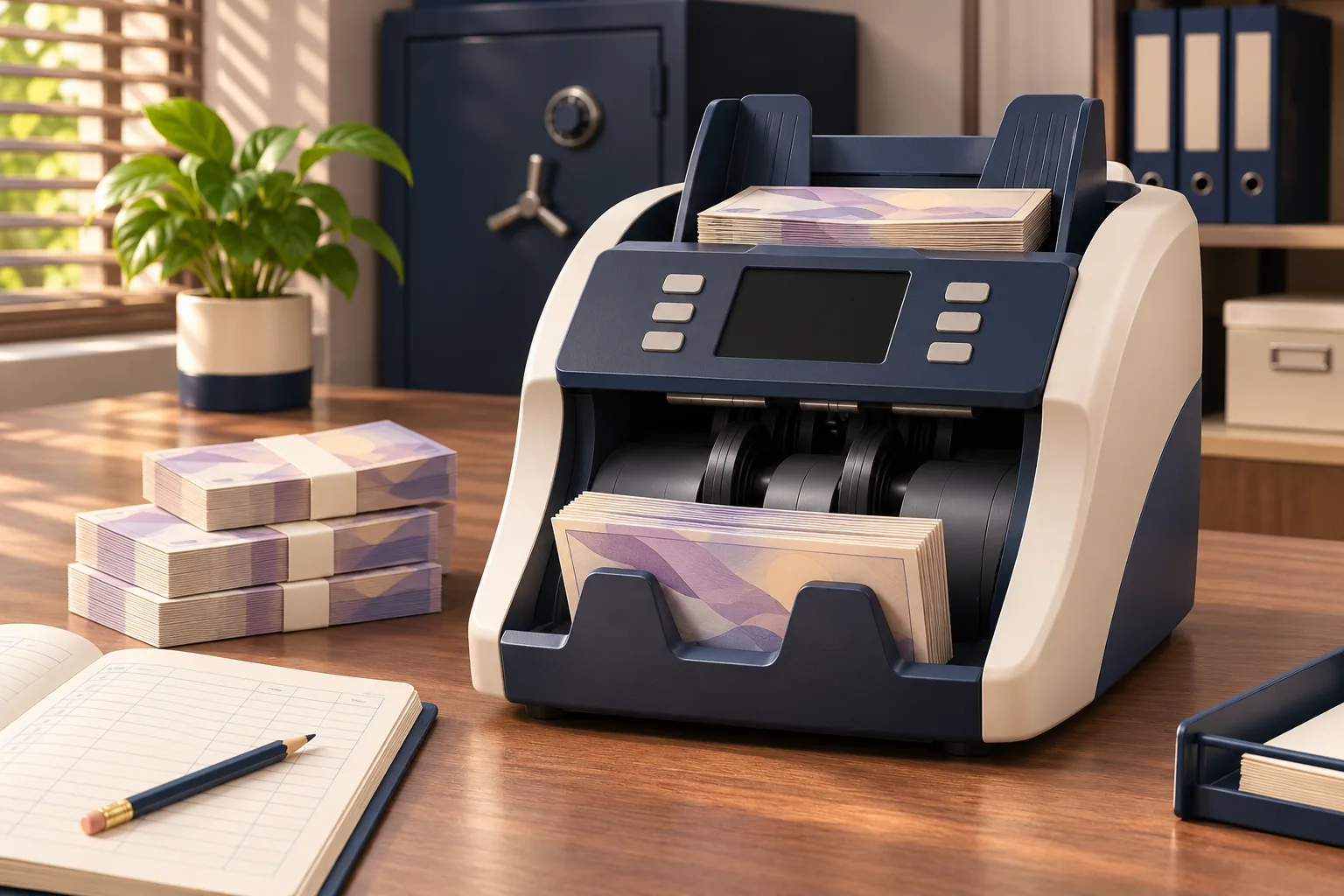
One machine per counter is easy to put on a purchase list. It may be the wrong quantity. Some counters use equipment only occasionally, while several others need it at the same closing time. A useful allocation follows the work rather than the number of desks.
Start by recording where cash is counted, when demand peaks and which tasks the equipment must perform. This gives a multi-counter budget a practical basis before individual model prices enter the discussion.
Map the peak, not just the daily total
For each location, record typical batches, note volumes and the busiest period. Include preparation, exceptions, recording and handover in the time assessment. A modest daily total can still create a queue if every till closes together.
Identify sites that can share a controlled station and those that operate independently. Where work would move between areas, include the receiving process and travel or handover time. Preserve the source of every batch throughout the proposed arrangement.
Compare shared and dedicated equipment
| Arrangement | Question to resolve |
|---|---|
| Shared station | Can it handle overlapping demand with clear batch ownership? |
| Dedicated unit | Does the local workload justify separate purchase and care? |
| Phased allocation | Can a representative trial confirm the wider quantity? |
Neither shared nor dedicated equipment is universally cheaper once the surrounding work is considered. Compare the practical implications for the organisation’s cash procedures and operating schedule.
Give each proposed unit a defined task
List its location, responsible role and required capability. A counter processing sorted notes may have a different requirement from one handling mixed denominations. Do not assume the same specification is suitable everywhere simply because standardisation is convenient.
When reviewing cash counting machine prices in Sri Lanka, ask for the exact configuration and relevant currency support to be identified. Keep site-specific exceptions separate from the common requirement.
Budget for putting the units into service
Clarify whether the offer covers central delivery or distribution to individual locations. Include setup, workspace preparation, training and acceptance checks. Staff need time to learn the agreed routine even when the equipment itself is familiar.
Ask how documentation, configuration changes and service records will be managed. A common model is useful when its working setup is also controlled and understood. Similar-looking machines can still be used differently by separate teams.
Test the allocation before expanding it
Where practical, trial the proposed arrangement at a representative location. Observe queue length, handover clarity and the time required to complete the whole task. Use those observations to refine the remaining purchases.
Confirm service arrangements and the approved procedure when a unit is unavailable. Do not assume a loan machine or spare is included without agreement. Any continuity allowance should reflect actual dependence and available alternatives.
Share the demand map and proposed quantities with Aiken. The final order should explain why each machine is needed and how it fits the working day, with future expansion recorded separately from the current purchase.
About The Author