

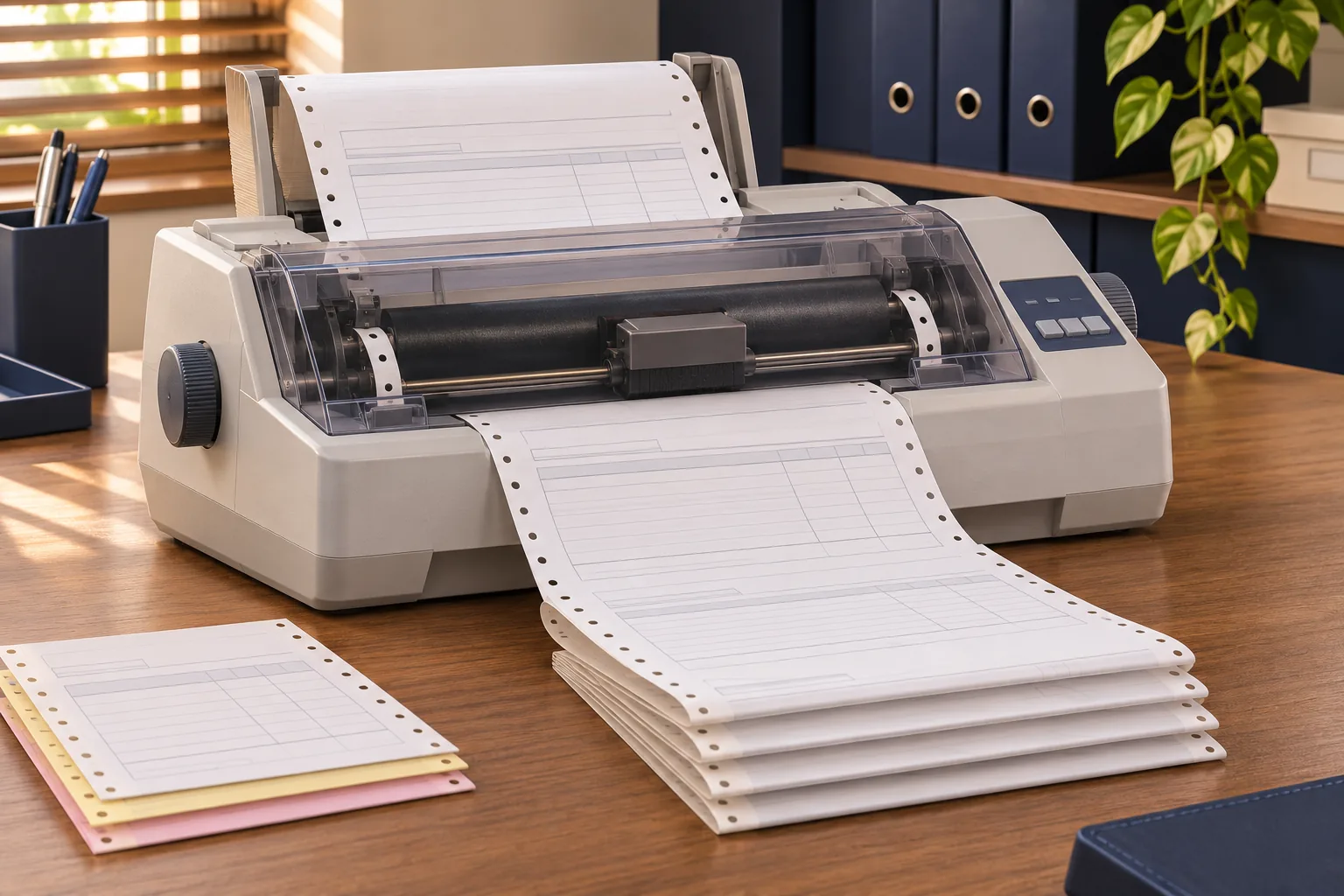
A printer can complete a job while the document still needs to be discarded. Misaligned fields, unreadable copies or incorrect content all consume stationery and time. Counting only sheets fed through the equipment gives an incomplete picture of cost.
For a business reviewing dot matrix printer prices in Sri Lanka, the more useful unit is an accepted form: a document that meets the requirement and can enter the next stage of work.
Define acceptance in practical terms
List the fields that must be readable, their required positions and the copies that must remain legible. Include the form size and handling requirements. Keep the standard simple enough for operators to apply consistently.
Use the same standard when reviewing existing equipment and proposed replacements. Otherwise, a low-cost consumable can appear attractive while its associated waste remains outside the comparison.
Collect a representative sample of work
Record normal printing demand and regular peaks. Separate materially different jobs, such as short dispatch forms and dense multi-page reports. Their use of stationery, ribbon and setup time may differ.
| Record | Why it matters |
|---|---|
| Accepted forms | The output that completed the intended task. |
| Discarded or repeated forms | Resources consumed without a usable result. |
| Reason for each repeat | Whether to investigate content, alignment, media or handling. |
| Consumables and setup | The recurring inputs needed for that workload. |
The goal is a useful working estimate, not artificial precision. If the sample covers an unusually quiet week, say so and collect information from a normal peak before committing to a long-term forecast.
Translate ribbon figures carefully
Confirm the correct ribbon identifier and current supply cost. A published yield has a test basis. It does not automatically equal a guaranteed number of the business’s own forms, which may differ in density and print mode.
Track actual replacements alongside output. For a simple recurring-cost estimate, divide the attributable ribbon and stationery spending by accepted forms over the same period. Keep purchase cost, maintenance and staff time visible separately unless the calculation explicitly includes them.
Test the form and printer together
Use representative stationery when reviewing the dot matrix printer range at Aiken. Confirm supported media, required copies and the intended software arrangement for the exact model.
Review loading and alignment when changing form types. A reliable setup record can reduce unnecessary trial printing. If waste mainly comes from incorrect application output, replacing the hardware may leave the underlying problem untouched.
Include the work around an interruption
Ask about routine care, service arrangements and what the warranty covers. Identify the business tasks affected if the printer is unavailable and the approved alternative process. Avoid assigning an unsupported fixed loss to every interruption.
Share the workload, media samples and cost observations with Aiken before requesting a quotation. Review the estimate after deployment. The useful comparison is the cost of producing the documents the business can actually use.
About The Author